
Empoli Glass: History of Tuscan Verde Glass and Collecting Guide
Discover Empoli glass — Tuscany's distinctive green verde ware from wine flasks to mid-century genie bottles. History, makers, identification tips for collectors.
When collectors picture Italian glass, Venice and Murano dominate the conversation. Yet Tuscany produced one of Europe's most recognizable — and most widely exported — glass traditions from a town forty kilometers west of Florence. Empoli glass, especially the deep olive-green ware known as verde (Italian for green), filled Mediterranean cellars, American department stores, and mid-century living rooms for centuries. Understanding Empoli means understanding a parallel Italian glass story: industrial utility, regional sand chemistry, and twentieth-century design objects that now trade as vintage collectibles.
Empoli in Context: Not Murano
Empoli sits in the Arno valley, a landscape shaped by river trade rather than lagoon craft guilds. Documented glass production reaches back to at least the thirteenth century, but the town's international profile rests on the green blown glass that local silica — rich in iron and manganese — naturally tinted without added colorants.
This is a different collecting field from Venetian filigree or millefiori. Empoli wares are often thick-walled, utilitarian, and green, though artistic lines expanded into cased color glass and crystal tableware by the mid-twentieth century. For the Venetian tradition that dominates Italian glass marketing, see our guides to Murano glass history and authentication and how Murano glass is made.
The Verde Tradition: Wine, Oil, and Daily Life
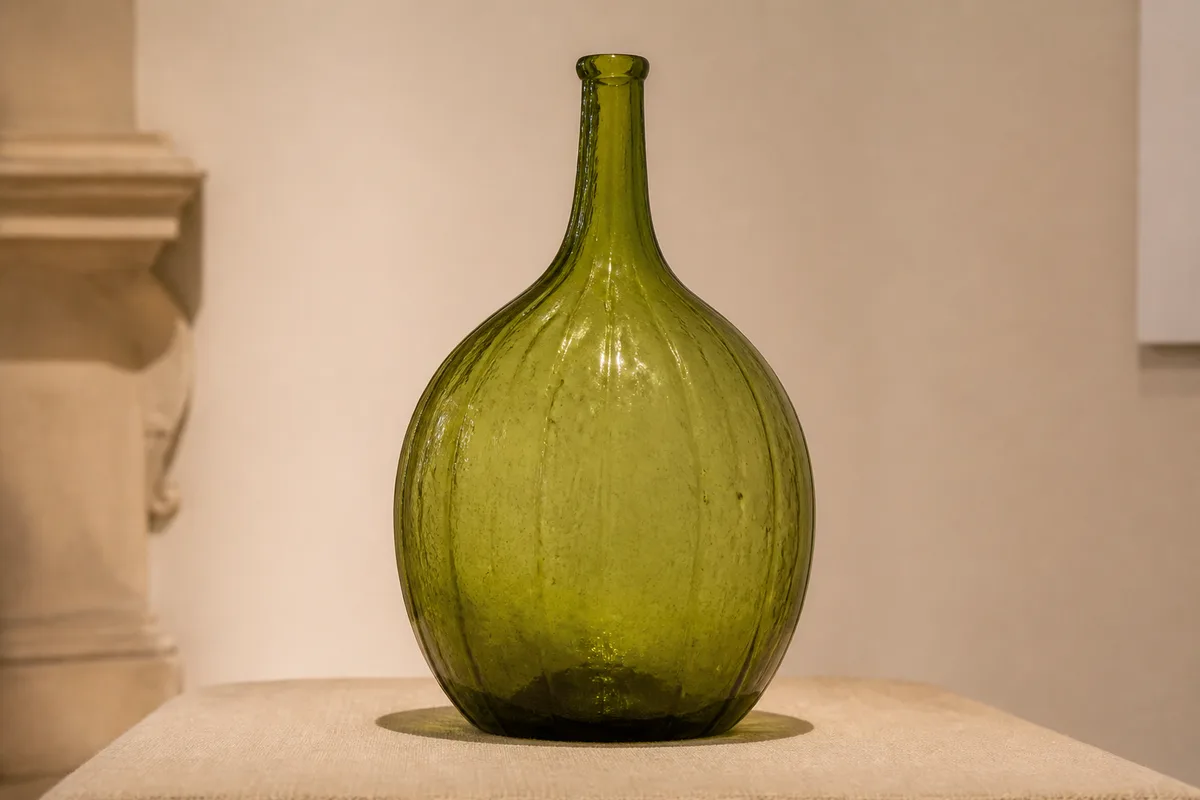
The archetypal Empoli object is the fiasco — the bulbous green wine flask traditionally wrapped in straw (fiasco di paglia). Alongside fiaschi, workshops produced damigiane (demijohns), oil bottles, kitchen jars, and drinking glasses that supplied Tuscan agriculture and export networks.
The Museo del Vetro di Empoli, opened in 2010 in a restored fourteenth-century salt warehouse, traces this evolution from hand blowing to semi-automatic and fully mechanized production. Its ground floor emphasizes objects of daily life: the green bottles that stocked kitchens and cantinas across twentieth-century Italy. Documentary footage from 1958, Vetro verde, accompanies the display — a reminder that Empoli glass was industrial identity, not boutique luxury.
Collectors should expect bubbles, striations, and uneven bases on older hand-blown verde pieces. These are not flaws in the Murano sense; they record factory conditions and the viscosity of thick green batch glass.
Industrial Expansion: Eighteenth to Twentieth Century
Production intensified from the eighteenth century as Empoli glassworks scaled to meet national demand. A major factory operated from 1830 to 1984, supplying containers for wine and olive oil — staples of the Italian economy — and basic tableware. Mechanization changed speed and uniformity but preserved the characteristic yellow-green to olive-green palette.
The upper floor of the Empoli museum documents a parallel track: artistic glass from the 1930s onward — table services, decorative objects, and design-led lines in verde, white, colored, and crystal glass responding to domestic and export markets. This split — utility versus design — explains why Empoli appears both in folk-kitchen collections and in mid-century modern interiors.
Mid-Century Empoli: Genie Bottles and Export Design
International collectors often encounter Empoli first through decorative bottles from the 1960s and 1970s — sometimes called "genie bottles" in English-language markets. These textured green (or cased color) vessels were sold empty or filled with wine, bubble bath, or scented products, frequently bearing nothing more than "Made in Italy" in raised lettering on the base.
Factories linked to this production include names such as Vetreria Artistica Sanminiatello (V.A.S.), Vetreria Pesa, and others in the Empoli district. Quality varies: mould seams, bubbles, and crude finishing were normal at price points that originally sold for less than a dollar in American stores. Today those characteristics read as period authenticity rather than damage.
Cased glass represents another major Empoli category: bright color layers encased in clear glass, sometimes with an opaque white lattimo interior. Producers associated with cased and colored lines include Cristalleria Fratelli Betti, CIVE, STELVIA, and Cristalleria Arno, among many smaller workshops. Attribution is difficult because labels often carried importer names (Alrose, Rossini, Guildcraft, Enesco) rather than factory marks.
Identifying Empoli Glass
Because marks are inconsistent, identification combines color, form, weight, and context:
Color. Classic verde ranges from yellow-green to deep olive. It should read as integral to the glass, not a surface coating. Cased pieces show distinct color layers when viewed at the rim.
Form. Fiaschi, demijohns, genie bottles, and chunky mid-century decanters each belong to recognizable typologies. Compare profiles against museum examples before paying premium "designer" prices for generic green mould-blown ware.
Base markings. "Made in Italy," "VE," "Depose," or factory initials appear on some export pieces; many historical utility bottles are unmarked.
Weight and wall thickness. Empoli verde tends toward heavier glass than fine Murano stemware. Thin, elegant blown forms may indicate a different origin unless documented.
Provenance. Auction descriptions, estate context (1960s–70s American or Northern European households), and dealer specialization help more than a single visual cue.
Major Makers and Names to Know
Research and market literature reference numerous Empoli-area manufacturers, including:
- Vetrerie E. Taddei & C. — verde production
- Vetreria Etrusca — verde and export lines
- Vetreria Toso Bagnoli — regional factory name (not to be confused automatically with Murano's Toso dynasty without further evidence)
- CIVE, CLAVE, Vetrerie Empolesi — twentieth-century production
Exact attribution often requires factory archives or specialist dealer knowledge. For most collectors, regional origin and period matter more than pinning a name to an unmarked bottle.
Condition and Market Notes
Utility verde bottles were made to be used; chips, ground mouths, and content staining are common. Mid-century decorative bottles may show mould wear or internal residue from original fillings.
Price tiers roughly follow:
- Common fiaschi and unmarked green kitchen bottles — accessible entry-level pieces.
- Documented mid-century design bottles with patterns (grapes, zodiac, basket weave) — moderate vintage market interest.
- Rare artistic lines with designer attribution or documented factory catalogs — higher specialist values.
Restoration is rarely economical for low-value utility glass; buy condition honestly described.
Empoli vs. Other Italian Glass and Ceramics
Collectors crossing categories should note:
- Murano emphasizes artistic blowing, color techniques, and named maestri — a different market structure and price scale.
- Empoli emphasizes regional industrial green glass and export mould-blown design — often more affordable and less systematically faked.
- Italian ceramics (maiolica, tin-glaze earthenware) share geographic overlap in Tuscany but differ entirely in material and authentication criteria. See our guide to antique Italian ceramics for that parallel field.
Building a Focused Collection
Strategies that work well internationally:
1. Utility verde — fiaschi, demijohns, and kitchen forms as sculptural folk-industrial objects.
2. Mid-century decorative — genie bottles and cased decanters by pattern or color family.
3. Museum-calibrated study — visit or study publications from the Museo del Vetro di Empoli before buying high-ticket attributed pieces.
Photograph bases and rims, note dimensions, and avoid assuming every green Italian bottle is Empoli — other regions produced green glass, though Empoli dominates the category in dealer language.
FAQ
Why is Empoli glass green?
Local sand and batch chemistry naturally produced iron- and manganese-tinted green glass. The color became a brand identity rather than an applied decoration.
Are "genie bottles" always Empoli?
Most green textured mid-century bottles sold as Empoli in Western markets were made in or near Empoli, but verify form and base markings rather than relying on nickname alone.
Is Empoli glass antique?
The tradition is centuries old, but much affordable material dates from the nineteenth and twentieth centuries. "Antique" in strict trade usage may mean pre-1900; much Empoli collecting is vintage (twentieth century).
How does Empoli compare to Murano for investment?
Murano has stronger luxury-brand recognition. Empoli offers entry-level collecting with growing mid-century design interest; treat both as cultural objects first.
Where can I see authentic examples?
The Museo del Vetro di Empoli is the primary reference collection. European and American auction houses regularly list verde bottles and cased Empoli decanters with condition reports.
Conclusion
Empoli glass rewards collectors who look beyond Venice. Its green bottles connected Tuscan agriculture to global export tables; its mid-century design lines supplied the aesthetic of inexpensive modern living. Whether you collect a single fiasco for its sculptural presence or pursue patterned genie bottles from the 1960s, the field combines accessible pricing with a coherent regional story. Start with color and form, learn the utility-versus-design split, and use museum references to calibrate the eye — Empoli is Italian glass history written in green.