
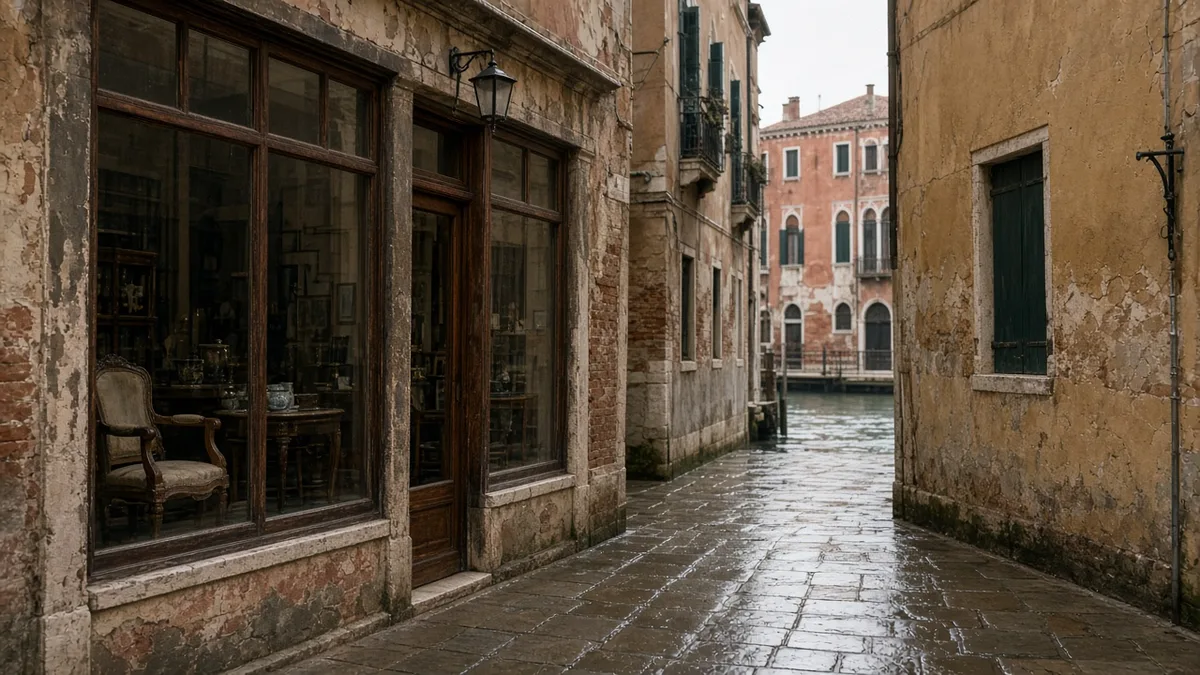
Venice Antiques Guide: San Maurizio, Murano Glass & Dorsoduro
A practical 48-hour Venice antiques map: Campo San Maurizio fair, Dorsoduro dealers, and how to buy Murano glass without tourist traps.
Venice’s antiques trade is thinner than Florence’s Oltrarno or Milan’s Navigli, and it is shaped by water logistics: large furniture is awkward, tourist glass is everywhere, and the one serious open-air fair is seasonal. Plan around Campo San Maurizio when the calendar coincides, use Dorsoduro plus the San Marco dealer cluster for shop days, and treat Murano as a separate glass half-day—not as a substitute for antiquarians. Treat Piazza San Marco and the Rialto bridge stalls as sightseeing. Fair dates move; confirm before you book.
For parallel city walks, see our Florence antiques guide, Milan antiques guide and Rome antiques guide. For furnace history and authenticity background, see our Murano glass overview.
How Venice’s antiques map works
| Layer | Best for | Typical stock |
|---|---|---|
| Campo San Maurizio fair (selected weekends) | Professional dealers from across Italy | Objects from roughly 17th–20th c.; portable pieces dominate |
| Permanent shops around San Maurizio / Santa Maria Zobenigo | Documented decorative arts | Higher prices, invoices |
| Dorsoduro (Calle Lunga San Barnaba, Accademia side streets) | Quieter galleries, furniture, engravings, books | Appointment culture common |
| Murano island (Fondamenta dei Vetrai and inland from the docks) | Contemporary furnace glass; some older stock in specialist shops | Labels, invoices, demo furnaces |
| Antiquarian bookshops | Prints, maps, books | Carryable; condition of paper matters |
| Rialto / San Marco souvenir frontage | Avoid for learning | Masks, imported “Murano-style” glass, tourist jewellery |
There is no weekly flea market equivalent to Porta Portese or Sinigaglia inside the historic city. Build the trip on shop streets first; treat the San Maurizio fair as a bonus when dates align; schedule Murano on a weekday morning if glass is part of the brief.
Day 1 — San Marco dealer streets (3–4 hours)
Morning: Campo San Maurizio and approaches. From Accademia or Sant’Angelo, walk to Campo San Maurizio (San Marco sestiere, near Campo Santo Stefano). Even on non-fair days, the campo and nearby streets toward Santa Maria del Giglio / Zobenigo hold antiquarians and related shops: small furniture, silver, clocks, jewellery, prints, decorative objects and, occasionally, older Venetian glass. Many dealers open roughly Tuesday–Saturday late morning to evening; Monday is often closed or by appointment. Looking costs nothing. Ask for period, materials, restoration and export status before price.
Midday: compare labels. Note how Venetian dealers describe lagoon vs mainland Veneto pieces. “In stile” is not the same as a dated workshop piece. If you are considering silver, apply the same mark discipline as elsewhere—see Italian silver hallmarks. For furniture, judge joinery and later replacements against criteria in our Italian furniture notes. For glass in an antiques shop, ask whether the piece is attributed to a period workshop, a twentieth-century furnace, or simply “Venetian”—three different claims.
Afternoon: prints and books. Use antiquarian bookshops in San Marco and Dorsoduro for maps, engravings and illustrated volumes—the most practical category for visitors who must pack light. Photograph plate margins and any publisher marks.
Day 1 buying rule. Prefer a receipt and a written description from a shop. Save fair bargaining for San Maurizio weekend editions. Do not calibrate glass prices from bridge stalls.
Day 2 — Dorsoduro, optional Murano, and fair days
Morning option A — Accademia to Calle Lunga San Barnaba. Cross or start at Accademia and walk the quieter Dorsoduro grid: side streets toward the Guggenheim, Calle Nuova Sant’Agnese and Calle Lunga San Barnaba. Local guides repeatedly place antique furniture, Venetian engravings and related stock in this sestiere. Pace is slower than San Marco; some rooms are by appointment. Use Campo Santa Margherita as an orientation point, not as an antiques market.
Morning option B — Murano for glass (2–4 hours). Take a vaporetto from Fondamente Nove (lines such as 4.1 / 4.2 or 3, check current ACTV timetables) to Murano. Skip free “exclusive factory tour” hawkers around San Marco. On the island, move inland from the first dockside showrooms toward Fondamenta dei Vetrai, the glass museum area and Basilica dei Santi Maria e Donato—buyers’ guides consistently flag better value and less pressure away from the landing. Watch a furnace demonstration if offered without purchase obligation; use it to train the eye before you spend.
Separate new Murano production from antique or mid-century glass:
- New work: ask for the Vetro Artistico Murano trademark where the maker participates in the Promovetro scheme (numbered / traceable label). Not every legitimate furnace joins; if there is no label, ask for a written invoice naming the workshop and technique.
- Older glass in Venice antiques rooms: demand period, condition, restorations and whether the piece was made on Murano or only “in the Venetian tradition.” Photograph pontil, weight and any signatures. For technique vocabulary (millefiori, sommerso and related families), see our Murano techniques notes; for named twentieth-century houses already covered on this site, see Murano glass artists.
When the calendar matches — Mercatino di Campo San Maurizio. Since 1970, a professional antiques fair occupies Campo San Maurizio on selected multi-day weekends (often Friday–Sunday or longer), commonly 09:00–19:00. The organiser’s 2026 calendar lists: 27–29 March; 7–10 May; 5–7 June; 11–13 September; 16–18 October; 4–6 December. Expect on the order of 50+ professional exhibitors and stock aimed at collectors—decorative objects, silver, ceramics, jewellery, books, glass and related works roughly from the seventeenth to twentieth centuries. Furniture is usually limited by size and transport. Free entry to the campo. Arrive early Friday if you want quieter browsing. Glass on fair stalls still needs the same invoice discipline as on Murano.
If your stay misses a fair weekend: choose Dorsoduro shops or Murano in the morning and keep one San Maurizio dealer revisit after lunch. Do not invent a flea-market day at Rialto.
What to look for (and what to leave)
Worth examining
- Small Venetian and Veneto furniture with readable construction
- Prints, maps and antiquarian books (easiest to ship or carry)
- Silver and jewellery with marks you can photograph—see Italian silver hallmarks
- Clocks and small objects when mechanism and case agree—compare with Italian antique clocks
- Ceramics when weight, glaze and marks align—see Italian ceramics
- Murano / Venetian glass with workshop name, period and (for new work) trademark or invoice—carryable, but pack with care
Usually skip on a short trip
- Cheap “Murano” beads and animals from San Marco / Rialto with no maker paperwork
- New “Murano-style” glass sold as antique
- High-pressure free boat tours that end in a single contracted showroom
- CITES materials (ivory, tortoiseshell) without papers
- Large furniture before you have a shipper who can handle stairs, bridges and water freight
- Anything sold only with a romantic lagoon story and no condition talk
Buyer’s checklist for foreign visitors
1. Calendar first. Check the official San Maurizio fair site before booking flights if the fair is your priority. Slot Murano on a weekday morning if glass matters.
2. Transport. Vaporetto to Accademia or Giglio for shops; Fondamente Nove for Murano. Factor high water and bridge stairs into furniture decisions.
3. Cash and card. Fairs: cash still useful. Galleries and furnaces: card and invoice.
4. Glass paperwork. New: Vetro Artistico Murano label when available, plus invoice. Old: written period/workshop claim. Keep labels intact if present.
5. Export. Ask about free circulation / export licences before paying for older works. Do not request under-invoicing.
6. Shipping. Confirm courier for furniture or large glass; canal logistics raise costs. Small glass can travel in luggage if packed hard.
7. Condition. Ask what was restored. Photograph marks, pontils, backs and undersides.
8. Negotiation. Polite at the fair; restrained in shops and furnaces.
9. Tourist filter. Ignore mask shops and bridge jewellery when calibrating prices—especially glass prices.
Suggested 48-hour skeleton
| When | Where | Purpose |
|---|---|---|
| Day 1 morning–afternoon | San Maurizio / Zobenigo streets | Gallery stock, buyer’s eye |
| Day 1 late | Book / print shops | Portable purchases |
| Day 2 morning | Dorsoduro or Murano | Quieter dealers or furnace glass |
| Fair weekend overlay | Campo San Maurizio 09:00–19:00 | Main open-air antiques day |
| Non-fair Sunday | Shop revisits or Murano | No substitute flea market |
If you only have one free morning and a fair is on, prioritise Campo San Maurizio; if glass is the priority and no fair falls in your stay, prioritise Murano + one San Maurizio hour.
FAQ
Is Piazza San Marco good for antiques or Murano glass?
No. Use San Maurizio, Dorsoduro, scheduled fair weekends, and the island of Murano for glass.
When is the Campo San Maurizio antiques market?
Selected weekends only—see the organiser’s published calendar (2026 dates listed above). Hours are typically 09:00–19:00.
Should I buy Murano glass in Venice or on Murano?
Prefer Murano for new furnace work. In the historic city, buy glass only from dealers who name workshop, period and condition in writing—not from bridge souvenir stalls.
What does Vetro Artistico Murano mean?
It is the Veneto-region origin trademark administered via Promovetro for participating Murano makers. Useful when present; its absence alone does not prove a fake, but then you need a clear invoice.
Is there a weekly flea market in central Venice?
Not comparable to Rome’s Porta Portese or Milan’s Sinigaglia. Do not plan around Rialto for antiques.
What should I buy first?
A small, receipted object from a San Maurizio or Dorsoduro dealer—or a documented Murano piece / print you can carry—before committing to furniture.
Can I ship furniture or large glass easily?
Only with a specialist who understands Venetian access. Price the logistics before you negotiate the piece.
Conclusion
Venice rewards a narrow plan: dealer streets around San Maurizio, a Dorsoduro walk for quieter stock, Murano for glass bought with paperwork, and the Campo San Maurizio fair when the few annual editions coincide with your stay. Skip the souvenir frontage, separate new furnace glass from antique claims, and ask concrete questions about period, condition and export. Leave the lagoon views for after the shortlist is decided.