
Milan Antiques Walking Guide: Brera, Navigli Markets & What to Buy
A practical 48-hour map of Milan antiques for visitors: Brera dealers, Navigli canal markets, Fiera di Sinigaglia, Mercatone dell'Antiquariato, and what to ask before you buy.
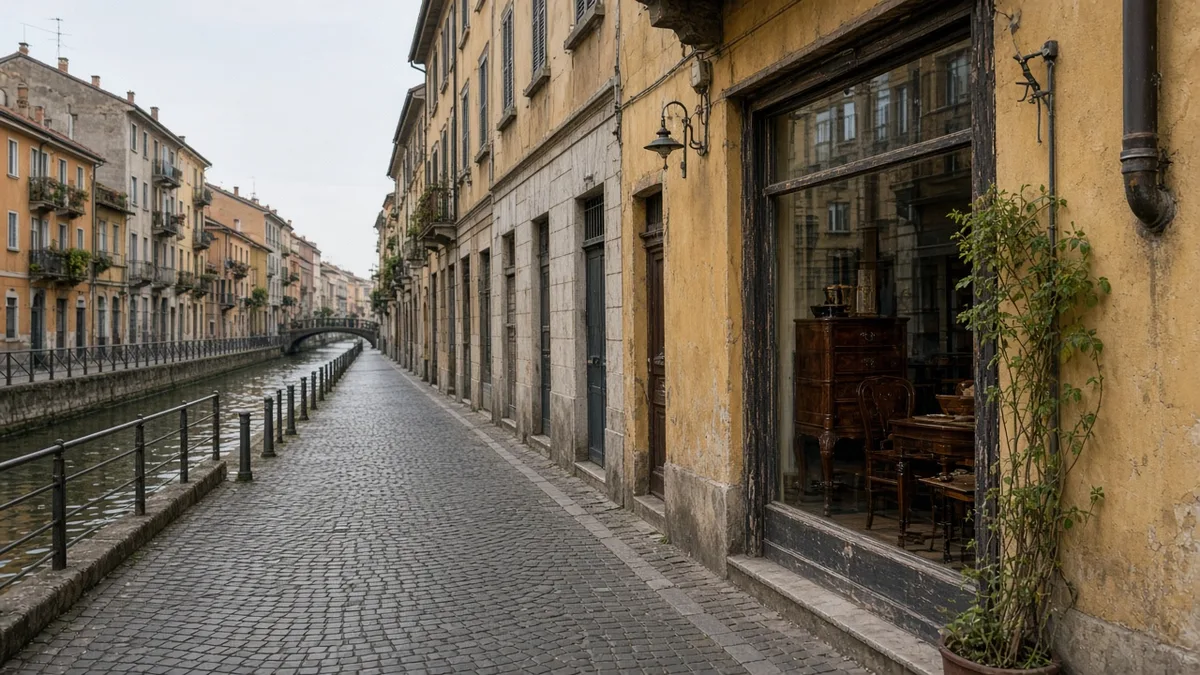
Milan’s antiques trade splits cleanly between Brera—compact gallery streets—and the Navigli, where weekend markets line the canal. A visitor with two days can cover both without treating the Quadrilatero della Moda as a buying district. This is a walking map and a buyer’s orientation. Market calendars move for holidays and weather; confirm dates before you go.
For a parallel southern-Italian city walk focused on workshop streets rather than canals, see our Florence antiques walking guide.
How Milan’s antiques map works
| Layer | Best for | Typical stock |
|---|---|---|
| Brera galleries (Via Madonnina, Fiori Chiari, side streets) | Documented furniture, paintings, decorative arts | Higher prices, invoices, quieter negotiation |
| Navigli shops between market days | Mixed antiques and vintage | Variable; good for window calibration |
| Fiera di Sinigaglia (Saturday) | Used goods, vintage, chance finds | Cash-friendly, little paperwork |
| Mercatone Naviglio Grande (last Sunday) | Broader antiques / modernariato selection | Long walk; arrive early |
| Mercatino di Brera (third Sunday) | Smaller fair inside the gallery quarter | Combines well with shop visits |
Duomo and Montenapoleone sell fashion and souvenirs. Useful for the city, weak for learning Italian antiques.
Day 1 — Brera dealer streets (3–4 hours)
Morning: Via Madonnina and Via Fiori Chiari. Start at the Pinacoteca di Brera or Lanza metro and walk the grid of Via Brera, Via Madonnina, Via Fiori Chiari and Piazza del Carmine. This is Milan’s densest cluster of antiquarians and related galleries: furniture, paintings, objects and jewellery in formal shopfronts. Many dealers open roughly Tuesday–Saturday late morning to evening; Monday is often closed or by appointment. Looking costs nothing. Ask for period, materials, restoration and export status before price.
Midday: compare labels. Note how Milanese dealers describe Lombard vs Venetian vs Tuscan pieces. “In stile” is not the same as a dated workshop piece. If you are considering silver, apply the same mark discipline as elsewhere—see Italian silver hallmarks. For furniture, judge joinery and later replacements against criteria in our Italian furniture notes.
Afternoon: optional third-Sunday market. On the third Sunday of the month (August often excluded), the Mercatino dell’Antiquariato di Brera occupies Via Fiori Chiari, Via Madonnina and Piazza del Carmine—roughly 09:00–18:00 in local listings. Some galleries stay open that day. Use the market to see small objects; use the shops for anything you might ship.
Day 1 buying rule. In Brera, prefer a receipt and a written description. Save aggressive bargaining for canal markets.
Day 2 — Navigli markets
Base yourself near Porta Genova (Metro M2) or the Darsena.
Saturday — Fiera di Sinigaglia. Milan’s long-running flea market runs every Saturday along Ripa di Porta Ticinese on the Naviglio Grande (often described between Via Paoli and Via Barsanti), about 08:00–18:00. Stock mixes second-hand clothing, vinyl, books, small antiques and bric-à-brac. It is a sorting market, not a vetted fair. Arrive in the morning; negotiate late only if the piece is still there. Free entry.
Last Sunday — Mercatone dell’Antiquariato sul Naviglio Grande. On the last Sunday of the month (check the published calendar; dates sometimes shift), the Alzaia Naviglio Grande from viale Gorizia toward the ponte di via Valenza fills with a long open-air antiques market—local sources cite on the order of 200–380 exhibitors and nearly two kilometres of stalls. Hours are commonly 08:30–18:30/19:00. Expect furniture, clocks, porcelain, silver, jewellery, books, modernariato and vintage. Side streets such as Corsico and Paoli are often flagged for higher-grade vintage. Many canal shops and cafés stay open. Free entry. Walk one direction with a shortlist, then return for decisions.
If your Sunday is not a Mercatone day: walk the Navigli shopfronts anyway, or shift Day 2 to Saturday Sinigaglia and keep Sunday for Brera revisits.
What to look for (and what to leave)
Worth examining
- Lombard and North Italian furniture with readable construction
- Clocks and scientific instruments (Milan’s trade is stronger here than Florence’s street markets)—compare with Italian antique clocks
- Silver and jewellery with marks you can photograph and check
- Ceramics and porcelain when weight, glaze and marks align—see Italian ceramics
- Modernariato lighting and design objects (Navigli markets carry more twentieth-century stock than Oltrarno Florence)
Usually skip on a short trip
- Unsigned luxury “designer” claims without provenance
- CITES materials (ivory, tortoiseshell) without papers
- Large furniture before you have a shipper
- Anything sold only with a romantic story and no condition talk
Buyer’s checklist for foreign visitors
1. Calendar first. Sinigaglia = Saturday. Mercatone = last Sunday. Brera market = third Sunday. Build the 48 hours around whichever falls in your stay.
2. Transport. Porta Genova (M2) for Navigli; Lanza / Montenapoleone area walking for Brera.
3. Cash and card. Markets: cash still useful. Galleries: card and invoice.
4. Export. Ask about free circulation / export licences before paying for older works. Do not request under-invoicing.
5. Shipping. Confirm courier for furniture; markets rarely handle export logistics.
6. Condition. Ask what was restored. Photograph marks, backs and undersides.
7. Negotiation. Expected at Sinigaglia and Mercatone; restrained in Brera shops.
8. Rain. Outdoor canal markets shrink or pack early—have an indoor gallery backup.
Suggested 48-hour skeleton
| When | Where | Purpose |
|---|---|---|
| Day 1 morning–afternoon | Brera streets | Gallery stock, buyer’s eye |
| Day 1 evening (optional) | Brera / centre | Rest; no forced shopping |
| Day 2 Saturday | Sinigaglia | Flea / chance finds |
| Day 2 last Sunday | Mercatone Naviglio | Main antiques market walk |
| Alternate Sunday | Brera market + shops | Compact fair + dealers |
If you only have one free morning, prioritise Mercatone when it coincides with your trip; otherwise Sinigaglia + one Brera hour.
FAQ
Is the Duomo area good for antiques?
No. Use Brera and the Navigli.
When is the big Navigli antiques market?
Usually the last Sunday of the month on Alzaia Naviglio Grande. Verify the month’s date.
What is Fiera di Sinigaglia?
The Saturday flea market on Ripa di Porta Ticinese—older, broader, less curated than the Mercatone.
When is the Brera antiques market?
Typically the third Sunday of the month on Via Fiori Chiari / Via Madonnina / Piazza del Carmine.
What should I buy first?
A small, receipted object from a Brera dealer—or a low-risk market find you can carry—before committing to furniture.
Conclusion
Milan separates cleanly: Brera for structured dealing, Navigli for market volume. Plan the weekend around Sinigaglia or the Mercatone, keep one weekday for gallery streets, and treat fashion districts as scenery. Ask concrete questions about period, condition and export; leave canal atmosphere for after the shortlist is decided.