
Florence Antiques Walking Guide: Oltrarno, Markets & What to Buy
A practical 48-hour map of Florence antiques for visitors: Via Maggio dealers, Oltrarno workshops, Santo Spirito market, Mercato delle Pulci, and what to ask before you buy.
Florence sells antiques in three overlapping layers: gallery streets, workshop neighbourhoods, and markets. A visitor with two days can see all three without treating the Duomo–Ponte Vecchio axis as a buying district. This guide is a walking map and a buyer’s orientation—not a dealer directory. Opening days shift; confirm market Sundays and shop hours before you set out.
How Florence’s antiques map works
| Layer | Best for | Typical stock |
|---|---|---|
| Gallery streets (Via Maggio and nearby) | Documented furniture, paintings, decorative arts | Higher prices, invoices, shipping talk |
| Oltrarno workshops | Frames, restoration, small decorative objects | Mixed quality; useful for learning materials |
| Markets (Santo Spirito monthly; Pulci daily) | Small finds, vintage, chance pieces | Cash, limited paperwork, negotiation |
The tourist centre north of the Arno is weak for serious antiques. Souvenir silver and “Murano” labels appear often; treat them as retail, not research.
Day 1 — Oltrarno dealer streets (about 4–5 hours of walking)
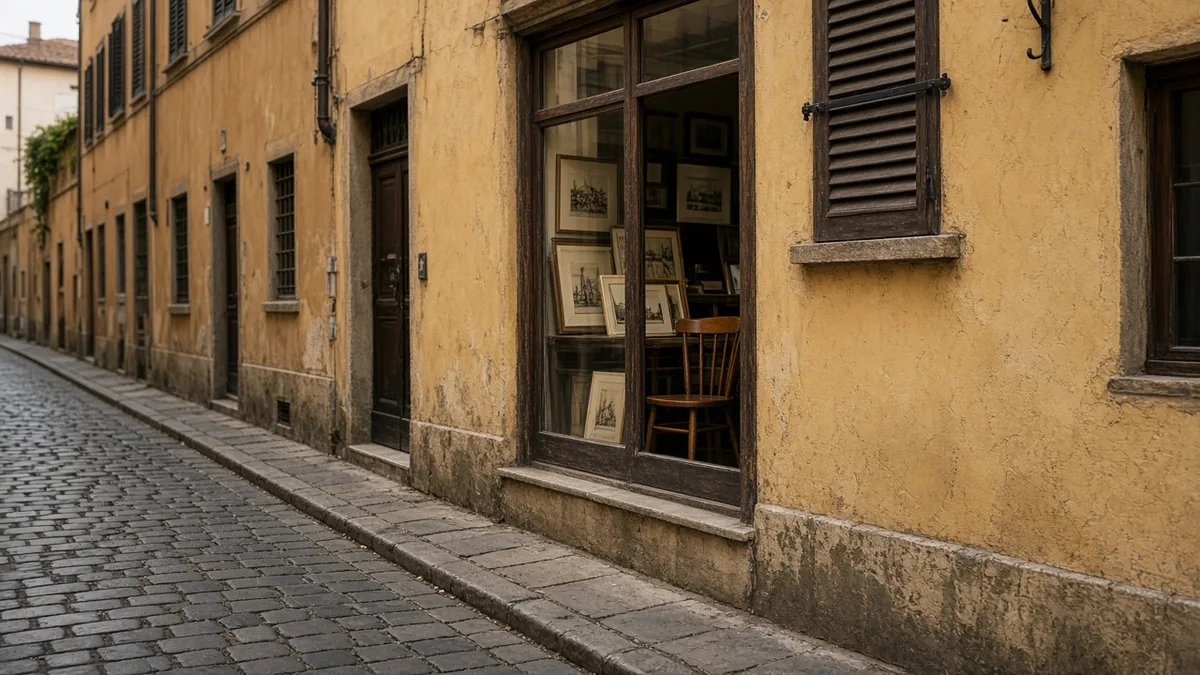
Morning: Via Maggio. Cross Ponte Santa Trinita or walk from Palazzo Pitti. Via Maggio is the long-established antiques strip of the Oltrarno: window displays of furniture, frames, paintings and decorative objects, mostly seventeenth- to nineteenth-century Italian and European material. Expect gallery hours closer to Tuesday–Saturday mid-morning through evening; many close Monday and for lunch. You may look without buying. Ask for period, region of manufacture, restoration history and whether export paperwork is available before discussing price.
Midday: Piazza Santo Spirito and side streets. Use the piazza as a pause, then walk Via di Santo Spirito, Via dei Serragli and lanes toward San Frediano. Here the density shifts from formal galleries to botteghe: framemakers, restorers, leather and small craft. This is where Florence’s restoration culture is visible at street level. A restored cornice or a repaired walnut drawer can teach more about construction than a polished stand alone.
Afternoon: Borgo San Jacopo / river return. Loop back toward the Arno. Compare what you saw on Via Maggio with smaller windows on the way—same city, different price band. If you are studying hardstone inlay or Tuscan furniture later, keep notes on construction and colour rather than dealer names; calibrate against published types such as Florentine pietra dura and Italian marquetry.
Day 1 buying rule. On gallery streets, ask for a written description (period, materials, condition). On workshop streets, ask what was restored and what was replaced. Do not assume “Florentine shop” means “Florentine manufacture.”
Day 2 — Markets and Sant’Ambrogio
Option A — Second Sunday of the month (Sept–June): Piazza Santo Spirito hosts the Fiera d’Oltrarno / Santo Spirito antiques and craft market (commonly listed as the second Sunday, suspended in July and August). Expect mixed stalls: small antiques, ceramics, vintage, furniture fragments, craft production. Hours are typically morning into evening; organisers and listings sometimes differ—verify the date for your month (Confesercenti Firenze is a usual contact for the Oltrarno fair). Cash is practical. Bargaining is normal; documentation is not.
Option B — Any ordinary day: Mercato delle Pulci, now in Piazza / Largo Pietro Annigoni (Sant’Ambrogio), the covered successor to the old Piazza de’ Ciompi flea market. City tourism lists daily opening roughly 09:00–19:30, closed 25–26 December and 1 January. Stalls carry used furniture, books, vinyl, vintage lighting, frames and miscellaneous objects. Quality is uneven by design. Treat it as a sorting exercise: walk the whole arcade once before committing.
Some guides note a larger outdoor presence on the last Sunday of the month around the Pulci area. If your visit falls on that Sunday, go early; if not, the permanent stalls still repay an hour.
Combine with food market timing. Sant’Ambrogio’s food market sits beside the Pulci. Use it for a break, not as a substitute for looking carefully at hinges, backs of frames and undersides of drawers.
What to look for (and what to leave)
Worth examining
- Tuscan and Italian furniture with honest wear and readable joinery
- Florentine frames and carved wood (common in local trade)
- Hardstone plaques and table tops when materials and seams look right—see pietra dura
- Silver with readable marks—use Italian hallmark criteria before paying for “800” claims
- Maiolica and regional ceramics when glaze and weight feel consistent—compare with Italian ceramics regions
Usually skip for a short trip
- Unsigned “Murano” glass at tourist prices
- Ivory, tortoiseshell and other CITES-sensitive materials without paperwork
- “Antico” labels with no century, no material, no condition note
- Anything you cannot ship or legally export
Buyer’s checklist for foreign visitors
1. Hours. Galleries: often closed Monday and midday. Markets: Sunday calendars matter; Pulci is the daily option.
2. Language. English is common in galleries; markets reward simple Italian plus photos of the object.
3. Payment. Markets: cash. Galleries: card and invoice. Keep receipts.
4. Export. Ask whether the piece needs a free-circulation declaration or export licence. Do not ask anyone to under-invoice.
5. Shipping. Confirm dealer or art courier before you buy large furniture. Cabin baggage is for small metal and ceramics only when legally allowed.
6. Condition. Ask what was restored. Florence’s strength is restoration literacy—use it.
7. Negotiation. Expected at markets; quieter and more formal in top galleries.
8. Calibration. If possible, visit Museo Stefano Bardini or Museo Horne on the same trip to reset your eye after market browsing.
Suggested 48-hour skeleton
| When | Where | Purpose |
|---|---|---|
| Day 1 morning | Via Maggio | Gallery windows, serious stock |
| Day 1 afternoon | Santo Spirito / San Frediano lanes | Workshops, smaller shops |
| Day 2 morning | Santo Spirito market or Pulci Annigoni | Market hunting |
| Day 2 afternoon | One museum (Bardini / Horne) + one revisit | Compare eye vs wallet |
If your second day is not a market Sunday, invert: Pulci in the morning, Via Maggio revisit for a shortlisted piece in the afternoon.
FAQ
Is the historic centre good for antiques?
For learning and buying with care, no. Use Oltrarno and Sant’Ambrogio.
When is the Santo Spirito antiques fair?
Commonly the second Sunday of the month, excluding July and August. Confirm before travel.
Where is the flea market now?
Mercato delle Pulci is at Piazza Pietro Annigoni, near Sant’Ambrogio, not in Piazza de’ Ciompi.
Can I bring an object to a dealer for a free valuation at a market?
Do not assume so. Markets sell; formal valuations are a separate service.
What is a sensible first purchase?
A well-described small object (frame, ceramic, marked silver) with a receipt—not the largest furniture piece on day one.
Conclusion
Florence rewards a slow walk south of the Arno and a separate morning among market stalls. Via Maggio shows how the trade presents itself; Santo Spirito and Annigoni show how objects circulate at street level. Use the two days to separate gallery stock from market chance, ask concrete questions about period and condition, and leave the souvenir strip for postcards.