
Venetian Mirror Identification: Murano Glass Frames & History
How to identify antique Venetian mirrors: Murano crystal glass, tin-mercury backing, glass frames, and what separates later copies from Venetian work.
Venetian Mirrors: Crystal Glass, Mercury Backing and Frame Clues
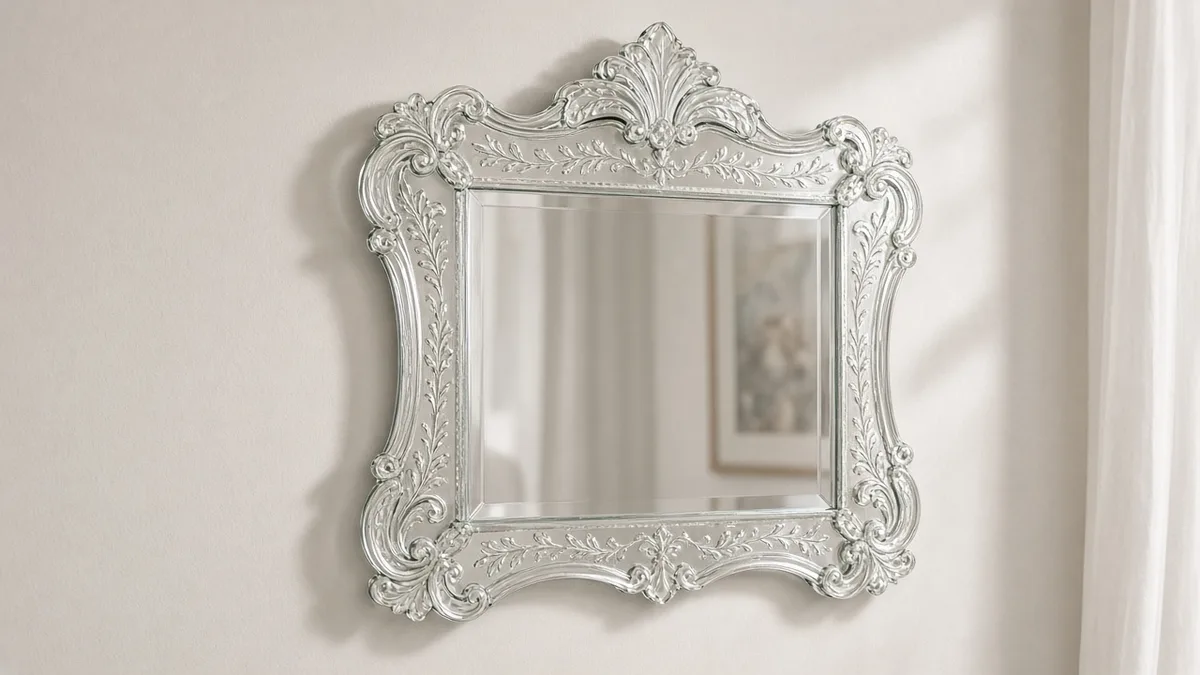
In décor and antiques search, “Venetian mirror” usually means a wall glass with an ornate frame of glass, often etched or lampworked, rather than a simple wood moulding. That type grew from Murano’s crystal technology and from Venice’s early mastery of plane mirror plates. Dating still rests on glass quality, backing method and construction—not on the word Murano printed on a modern label.
Related reading: Murano glass authenticity and the practical Venice antiques walking guide.
Crystal before the mirror trade
Around the mid-fifteenth century, Angelo Barovier developed a nearly colourless cristallo that could rival rock crystal. The Museo del Vetro on Murano treats that invention as the turning point that made Venetian transparent glass a European luxury. Without clear crystal sheet, large looking-glasses were impractical.
The 1507 privilege
Treccani’s biography of the d’Angelo family records that Andrea and Domenico d’Angelo, of the furnace al Gallo, obtained a twenty-year privilege on 19 May 1507 to produce specchi di vetro cristallino by a secret process then associated with Germany and Flanders. Their method opened a blown crystal cylinder into a plate and backed it with a tin amalgam—the route that made Venetian plane mirrors exportable.
Treccani’s entry on specchio places the start of Venetian plane glass mirrors, tin-and-mercury amalgam backed, at the beginning of the sixteenth century, with European diffusion that later faced French royal plate-glass competition from 1665.
What “specchio veneziano” means as a type
The same Treccani article defines the artistic Venetian mirror as a plate enclosed in a frame of the same material, rich in decorative motifs, sometimes with engraving or painting on the glass. That is the object most collectors still mean: glass-on-glass architecture, floral sprays, cartouches, occasionally coloured canes—not a mahogany Chippendale frame with Italian plate.
Later centuries add etched decoration, coloured glass flowers and revival pieces aimed at Grand Tour and hotel markets. Construction still matters more than floral abundance.
How to examine a candidate
1. Plate: look for seeds, cord and slight waviness consistent with historic glass; perfectly flat float glass suggests a late plate.
2. Backing: historic tin-mercury amalgam darkens and foxes unevenly; modern mirrored film or silvering reads differently at chips.
3. Frame joints: lampworked flowers and scrolled cartouches should show hot joins and tool marks, not glue seams of plastic “crystal.”
4. Reverse: wooden backboards, iron tabs and paper labels can be replaced—treat them as secondary.
5. Scale and symmetry: eighteenth- and nineteenth-century Venice pieces vary; factory-perfect bilateral symmetry often flags recent tourist manufacture.
Common mistakes: calling every etched bathroom mirror “Murano”; dating only by floral density; ignoring backing chemistry; equating a Venini-style modern label with a mercury-backed plate.
FAQ
Did Murano invent the mirror?
Venice industrialised plane crystal mirrors with amalgam backing in the early 1500s; convex medieval glass mirrors existed earlier elsewhere.
Is a glass frame required?
For the classic specchio veneziano type, yes—the frame is glass. A plain wood frame with Italian plate is a different object.
How do French plates fit?
From 1665 French royal manufacture competed with Venetian exports; compare plate quality and frame tradition rather than nationality slogans.
Conclusion
A Venetian mirror is dated by crystal, amalgam and glass-frame construction. Start with Barovier’s cristallo context, the 1507 d’Angelo privilege, and Treccani’s definition of the glass-framed type—then judge the physical object, not the salesroom adjective.
Mercury, tin and later silvering
Historic Venetian plates rely on a tin-rich amalgam that includes mercury—the bright, slightly warm reflection collectors still recognise on unrestored glasses. As the amalgam deteriorates, grey clouds and black “foxing” appear in irregular maps, often denser toward the edges where moisture entered. Modern vacuum silvering or plastic mirror film fails differently: sharp edges to loss, uniform grey, or a polymer sheet visible at a lifted corner.
Never “resilver” a candidate before documentation. Once the historic amalgam is replaced, a primary dating clue disappears. Photograph the reverse with the backboard removed when it is safe to do so; note paper labels, tax stamps and dealer stickers separately from the glass evidence.
Frames: glass architecture vs wood
The classic Venetian type builds the frame from glass elements—plates, scrolls, flowers, leaf sprays—hot-joined or assembled on a hidden armature. Tool marks at joins, tiny bubbles in flower petals and slight asymmetry are expected. Casting seams from plastic “crystal,” solvent glue threads and perfectly repeated flower modules point to late decorative copies aimed at hotel and retail markets.
Wood-framed mirrors with Italian plates exist and can be excellent objects; they are simply not the Treccani specchio veneziano type. In listings, say “Italian plate in wood frame” rather than “Venetian mirror” unless the frame is glass.
Revival centuries
Seventeenth- to nineteenth-century Venice continued to export mirrors while French plate glass rose. Nineteenth-century revival pieces for travellers can be honest Murano work with historic technique or mixed assemblies using older plates in newer frames. Judge each interface: does the plate’s amalgam match the frame’s wear? Are flower sprays continuous with the crest or bolted on as souvenirs?
Practical buying notes
Ask for reverse photographs, edge chips and a measurement of plate thickness if the seller will provide it. Avoid cleaners that strip gilt decoration on etched borders. For shipping, glass-framed mirrors need corner protection far beyond a flat IKEA-style glass; structural failure often starts at lampworked crests.
Relation to Murano luxury glass
Murano's fifteenth- and sixteenth-century inventions—cristallo, enamel painting, filigree—created the material culture in which mirrors could become furniture. The Museo del Vetro's galleries for that golden age are the right mental backdrop even when a specific mirror is later. A Venetian mirror is part of that glass history, not a separate "furniture only" category.
When comparing to French plates after 1665, remember Treccani's point: French royal manufacture perfected large sheet techniques that challenged Venetian exports. Competition changed sizes and prices; it did not erase the glass-framed Venetian typology that collectors still seek.
For walking-context buying in the city, use the Venice antiques guide on this site and insist on reverse photographs before you ship anything with lampworked crests.